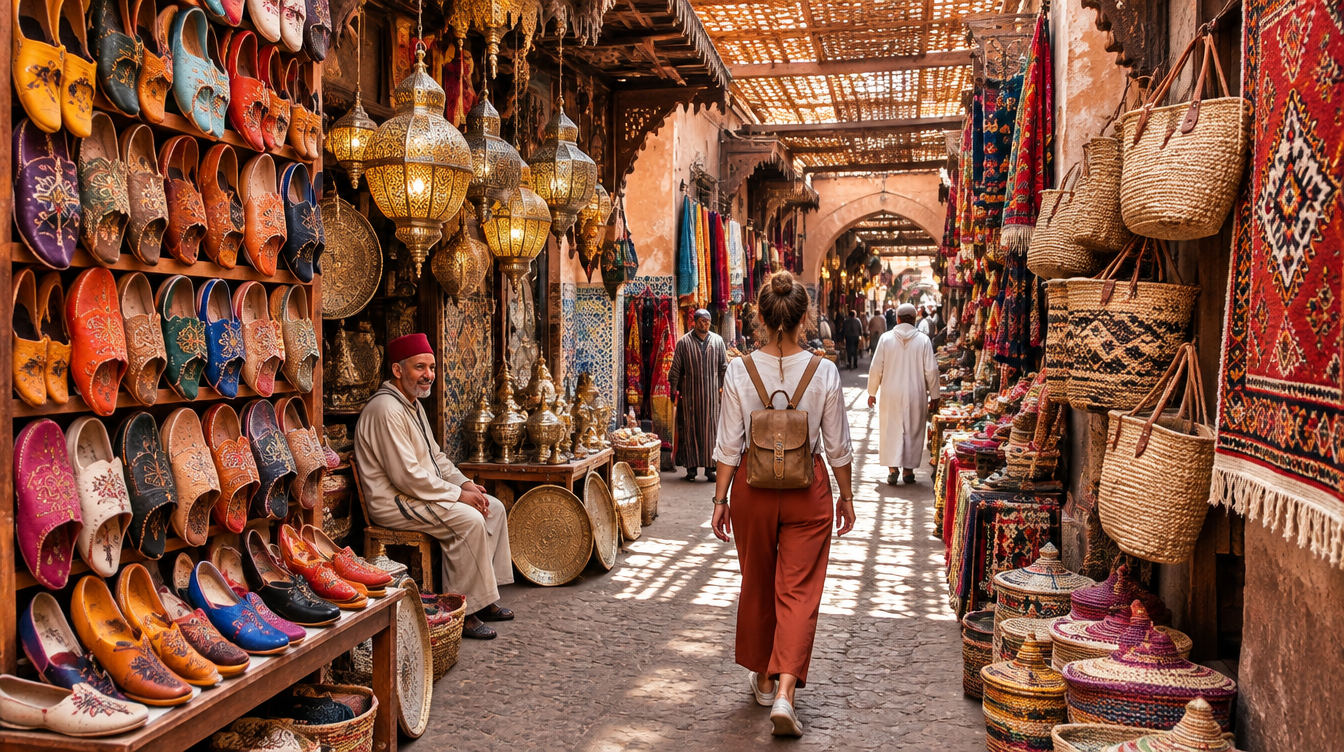
Morocco is just a few hours’ flight from Europe, but it feels like a whole different world the moment you step off the plane: a different language, a different currency, different social cues. Nothing complicated, as long as you know what to expect. Here are our practical tips for visiting Morocco, put together from Marrakech, to help you prepare for your trip and enjoy the country without any unpleasant surprises.
The essentials in 30 seconds
- Documents: a passport valid for the entire duration of your stay; no visa required for French citizens for stays under 90 days.
- Money: the dirham (MAD) is obtained locally; always keep some cash on hand.
- Accommodation: a riad in the medina to experience Morocco from the inside.
- Attitude: modest clothing, smiling negotiation, a firm “no thank you” to touts.
Before you go
1. Check your ID documents
For a tourist stay of under 90 days, French nationals do not need a visa. However, you do need a passport valid for the entire duration of your stay: an identity card is not sufficient for individual travel. Rules vary depending on nationality; be sure to check them with the Moroccan consulate or your home country’s official website before booking your tickets.
2. Choose the right season
Spring (March to May) and autumn (September to November) are the most pleasant times to visit Morocco. Summer is very hot in Marrakech, Fes, and the desert, but ideal along the Atlantic coast (Essaouira, Agadir, Taghazout). Winter days are sunny and nights are cold, with snow on the High Atlas mountains.
3. Factor in Ramadan
In 2027, Ramadan is expected to begin around February 8 (the exact date depends on the sighting of the moon). Traveling during this period is entirely possible and often wonderful, with lively evenings after the breaking of the fast. Just expect reduced hours for certain businesses and sites, restaurants that may be closed during the day outside tourist areas, and avoid eating or drinking openly in the street. Please note: Morocco usually operates on GMT+1 time, but switches back to GMT time during Ramadan.
4. Get travel insurance
Moroccan private clinics are of good quality in the major cities, but medical care must be paid for upfront. Insurance covering medical expenses and repatriation is strongly recommended, especially if you plan on activities like hiking in the Atlas Mountains, quad biking, or surfing. Also, check what your credit card already covers.
5. Book your accommodation in advance
To experience Morocco from the inside, nothing beats a riad: a traditional house built around a central patio, often featuring a rooftop terrace and homemade breakfast. The best riads in the medinas of Marrakech and Fes book up fast during school holidays and long weekends, so make sure to reserve early. To compare, you can browse the selection of authentic riads on Riads Kech, where you can book with a small deposit and pay the balance on-site (see their cancellation policy), or explore the addresses offered by Riadway.
Before booking, check three things: the walking distance from the nearest parking lot (cars cannot enter the medina), the presence of a terrace, and recent reviews regarding cleanliness and hospitality.
6. Set up your internet connection
A local SIM card (Maroc Telecom, Orange, inwi) is easily purchased at the airport or in town with your passport, and data plans are inexpensive. Buying an eSIM before departure lets you skip any hassle. Also, download an offline map: inside the medinas, GPS is often unreliable.
7. No power adapter needed
Morocco uses 220V and type C and E plugs, the same as in France and Belgium. Travelers coming from the UK, Switzerland, or North America will need an adapter.
Money and budget
8. Exchange your money locally, not before
The currency is the Moroccan dirham (MAD). It is a restricted currency, meaning you won’t easily be able to get it before departure, and taking banknotes out of the country is limited (the Foreign Exchange Office allows around 2,000 dirhams per traveler). The simplest option is to withdraw cash from bank ATMs or exchange euros at authorized exchange bureaus, which clearly display their rates and rarely charge commissions. Keep your exchange receipt, as it is useful if you want to convert your dirhams back when leaving.
9. Always carry cash
Credit cards are accepted in hotels, large boutiques, and many city restaurants. However, taxis, souks, small cafes, entrance fees to many attractions, and tips must be paid in cash. Always keep small change on hand: vendors rarely have change for large bills.
10. Negotiate with a smile
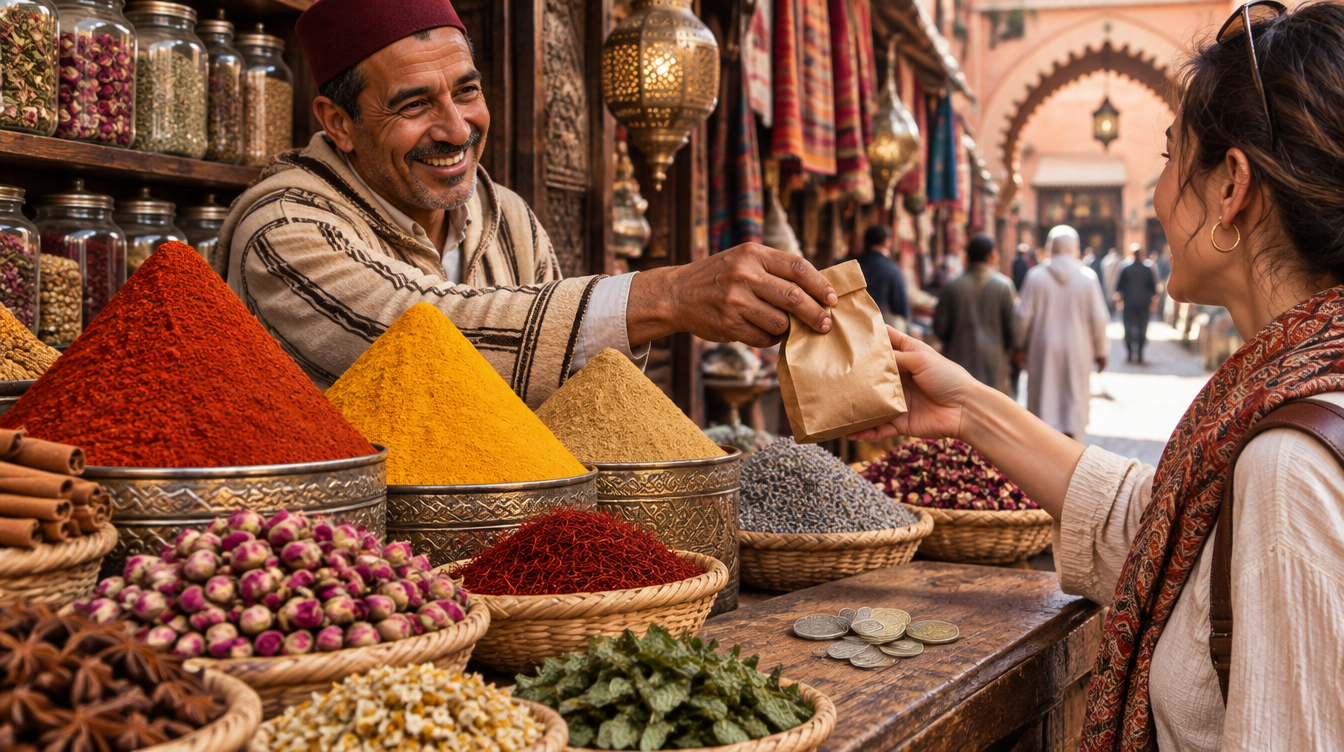
In the souks, fixed prices do not exist: everything is up for discussion. Decide on a maximum price for yourself beforehand, offer significantly less than the initial price quoted, and take your time. If you cannot reach an agreement, say thank you and walk away: that is often when the price drops. On the other hand, you do not negotiate in supermarkets, fixed-price shops, or restaurants.
11. Plan for tips
Tipping is part of Moroccan culture. At restaurants, leave around 10% if service is not included. Budget a few dirhams for parking attendants, porters, or anyone who helps you find your way, and a more generous tip for a guide or driver at the end of an excursion.
Getting around Morocco
13. Combine trains, buses, and taxis
The ONCF train network comfortably connects major cities (Tangier, Rabat, Casablanca, Fes, Meknes, Marrakech), featuring the Al Boraq high-speed line between Tangier and Casablanca. For other destinations, CTM and Supratours coach buses are reliable and air-conditioned. In the city, take a petit taxi (insist on the meter or agree on the fare before getting in); grands taxis run shared routes between towns and villages.
13. Plan your arrival
Arriving at night in an unfamiliar medina, suitcase in hand, is far from relaxing. Ask your riad to arrange an airport transfer: a driver will be waiting for you at arrivals and someone will walk with you to the door. This is one of the services offered by many riads available for booking on Riads Kech.
14. Only rent a car for the open road
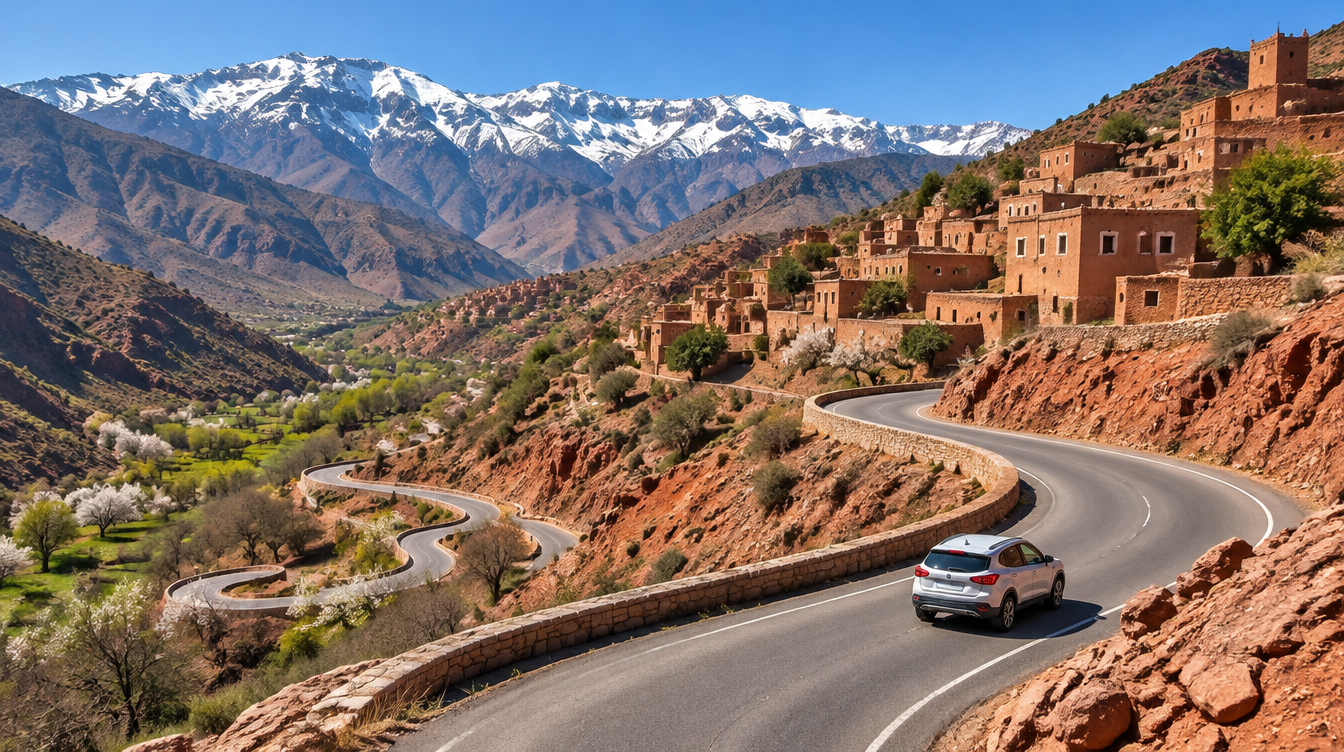
A car is ideal for a road trip to the desert or into the Atlas Mountains, but useless and a hassle in the city. Pick it up the day you leave the city, drive carefully (frequent speed checks, pedestrians, carts, and animals), and avoid driving at night on mountain roads.
On-site: the right habits to adopt
15. Dress respectfully
Morocco is a Muslim country, open yet attached to certain rules. In the city and the countryside, prefer clothing that covers your shoulders and knees, for both women and men. You will feel more comfortable and attract less unwanted attention. Swimsuits and short shorts are reserved for the beach, the pool, and coastal resorts. Mosque entry is generally reserved for Muslims, with the notable exception of the Hassan II Mosque in Casablanca.
16. Beware of fake guides
In the medinas, people will often offer you help: “it’s closed that way,” “let me show you the tannery”… These impromptu guides expect payment or a commission from the shops they take you to. A polite but firm “no thank you” is enough, without stopping. For a real tour, book an official guide through your riad or the tourist office.
17. Ask before taking photos
Many Moroccans do not like having their picture taken. Always ask for permission, and expect street performers or water sellers to ask for a few dirhams. Avoid photographing official buildings, the police, and the military.
18. Eat local, drink bottled water
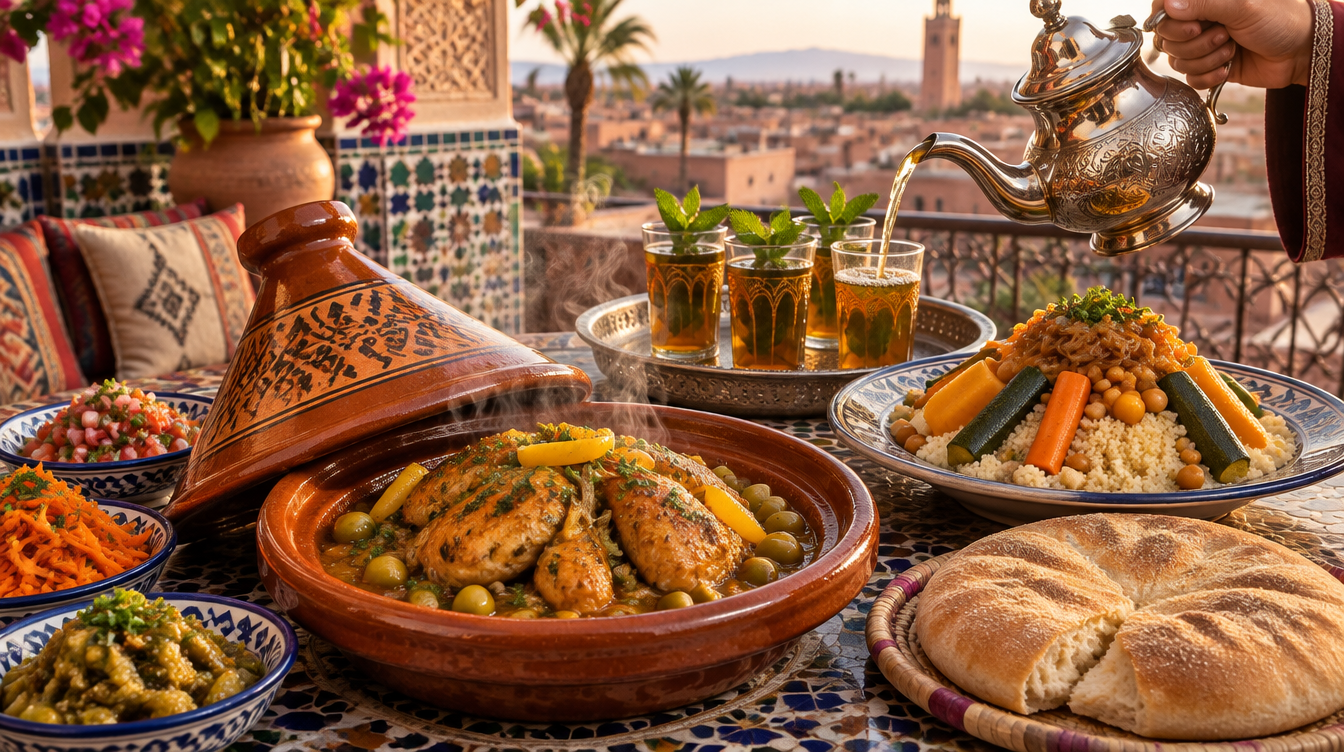
Tagines, Friday couscous, harira, msemen for breakfast: Moroccan cuisine is one of the greatest pleasures of traveling here. Choose food stands and restaurants that are very popular with locals, which is a guarantee of freshness. As a precaution, drink bottled water and be wary of raw vegetables for the first few days. Alcohol can be found in hotels, some restaurants, and a few supermarkets, but it is not consumed on the street.
19. Jot down useful phone numbers
Morocco is generally a safe country for travelers; the main inconveniences remain petty crime in crowds and commercial harassment. Keep your belongings close to you in markets and busy squares, and save these numbers:
| Service | Number |
|---|---|
| Police (in the city) | 19 |
| Gendarmerie (outside cities) | 177 |
| Firefighters and ambulances | 15 |
For minor health issues, pharmacies (green cross) are numerous and pharmacists offer good advice; an on-call pharmacy is open at night in every city.
20. Get out of the cities
Morocco is not limited to its medinas. A night in the desert, a hike in the Atlas valleys, or a day on the coast in Essaouira gives a completely different picture of the country. From Marrakech, most of these excursions can be done in a single day; you will find a detailed selection in the guide to excursions from Marrakech by Riads Kech, and our sightseeing ideas in our Things to do in Marrakech guide.
Frequently Asked Questions
Do I need a visa to visit Morocco?
No for French citizens, for a tourist stay of less than 90 days: a passport valid for the entire duration of the stay is sufficient. Conditions vary depending on your nationality, so check before you leave.
Can you pay by credit card in Morocco?
Yes in hotels, riads, large shops, and many restaurants in the city. Cash remains essential for taxis, souks, tips, and numerous sites.
How should I dress to visit Morocco?
Opt for lightweight yet modest clothing (shoulders and knees covered), a light sweater for evenings and the desert, and good walking shoes for the medinas.
What is the best time to visit Morocco?
Spring and autumn, for pleasant temperatures everywhere. Summer is well suited for the Atlantic coast, and winter for the cities and the desert during the day.
Practical information (formalities, exchange regulations, Ramadan dates) is subject to change: check with official sources before your departure.