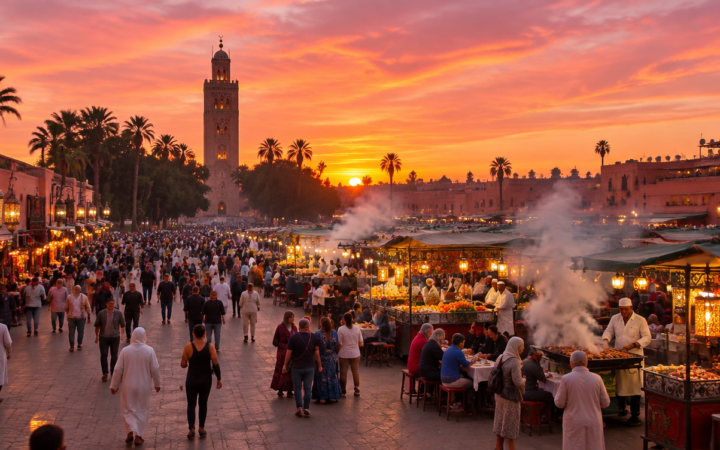
Riad or hotel in Marrakech: a riad is ideal if you want to stay in the heart of the medina, inside an intimate patio house with personalized service, while a hotel is more practical if you are traveling by car, with young children, or looking for a large swimming pool and full amenities. The right choice depends mainly on your travel style, your budget, and the pace you want for your stay.
From Marrakech, here is an honest comparison, criterion by criterion, to help you decide without regrets.
Riad or hotel: what are we actually talking about?
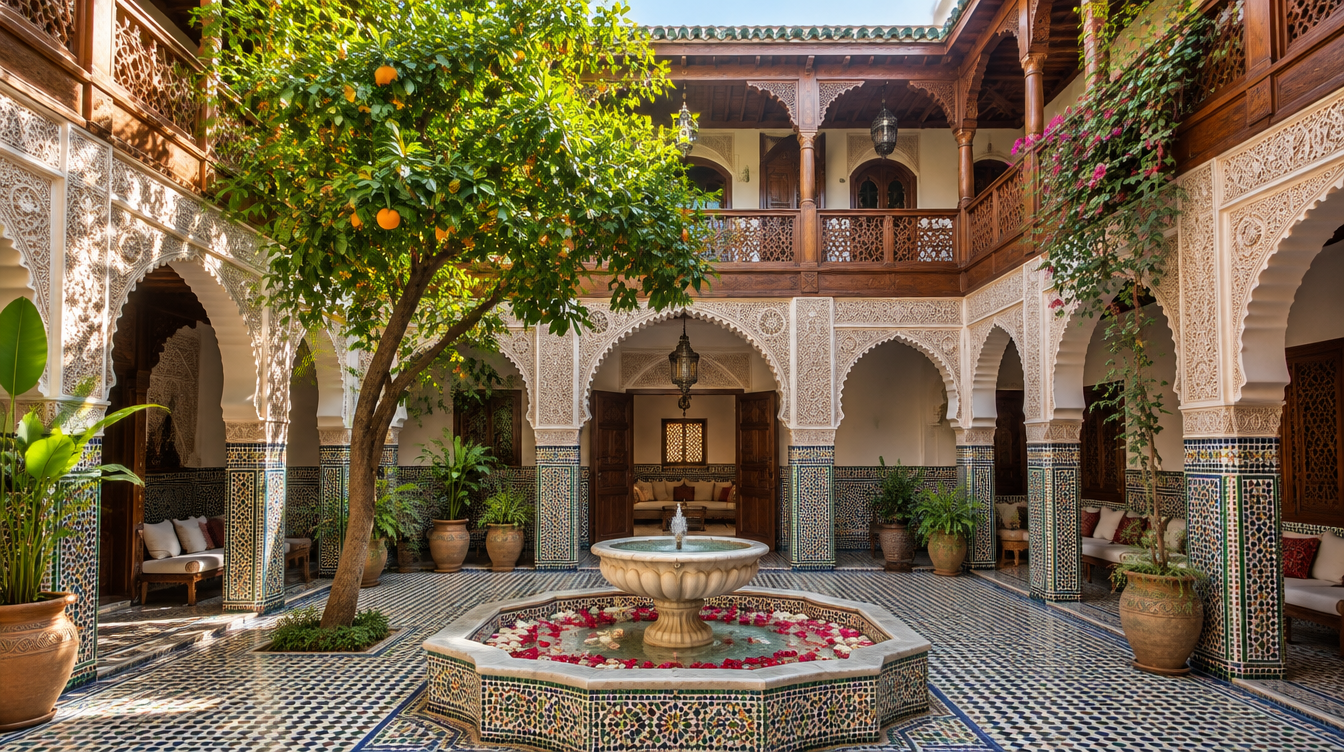
A riad is a traditional medina house built around an interior courtyard, often planted with trees and featuring a fountain or small plunge pool. The rooms open onto this patio, and almost all riads have a rooftop terrace. Most have between 3 and 10 rooms, which explains their guesthouse feel.
A hotel in Marrakech is typically located in the modern neighborhoods (Guéliz, Hivernage), the Palmeraie, or along the Ourika and Amizmiz roads. It offers more rooms, a 24-hour front desk, parking facilities, and often large swimming pools. In between are “riad-hotels” or boutique hotels: several combined riads featuring a spa and restaurant, blending traditional surroundings with more extensive services.
The pros and cons of a riad
What you gain
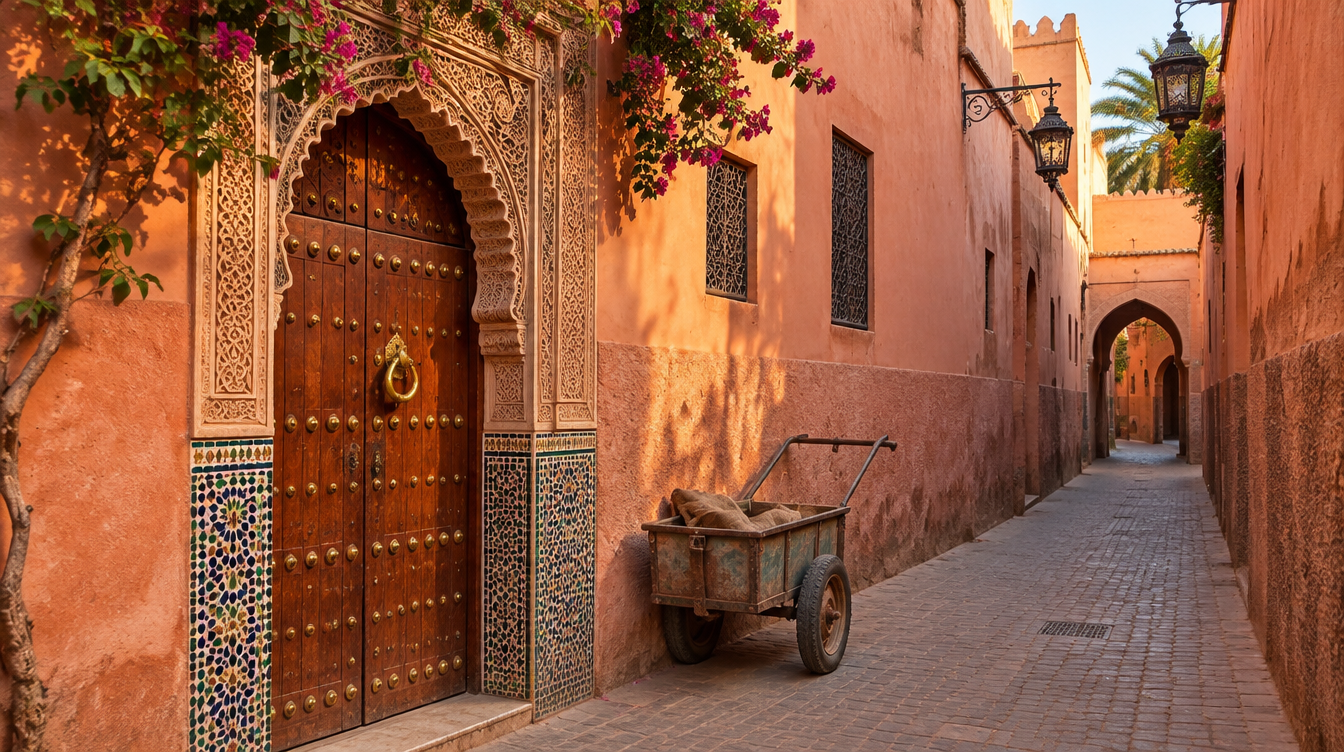
- Location: you are right in the medina, often a 5 to 20-minute walk from Jemaa el-Fna, the souks, and the palaces.
- Interior peace: thick walls and a lack of street-facing windows provide surprising isolation from city noise.
- Personalized service: the team knows every guest and can book a hammam, a guide, or dinner on the terrace.
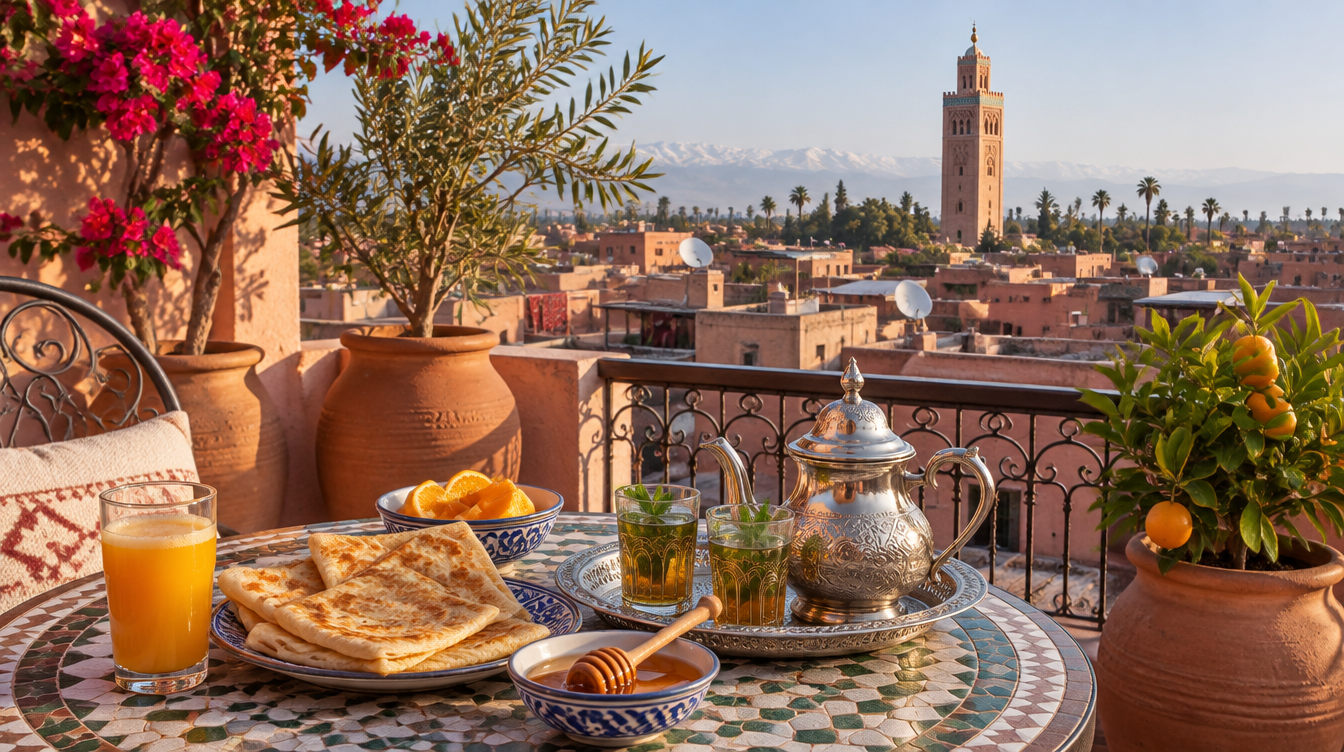
- Setting: zellige tiles, tadelakt plaster, carved cedar wood, with breakfast served in the courtyard or on the roof.
- Value for money: simple, clean riads can be found starting at modest prices.
What to accept
- Foot access only: most alleyways are off-limits to cars. Taxis drop you off at a medina gate or parking lot, and a porter with a handcart brings your luggage.
- Stairs: often narrow and steep, with no elevator. Something to check if you have walking difficulties.
- Household noise: rooms open onto the patio, so you may occasionally hear other guests, the call to prayer from the nearby mosque, or storks in the early morning.
- Small pool: when available, it is usually a courtyard or rooftop plunge pool, not a lap pool.
- Chilly winters: from December to February, nights are cold, and an open patio retains little heat. Make sure your room is heated.
The pros and cons of a hotel
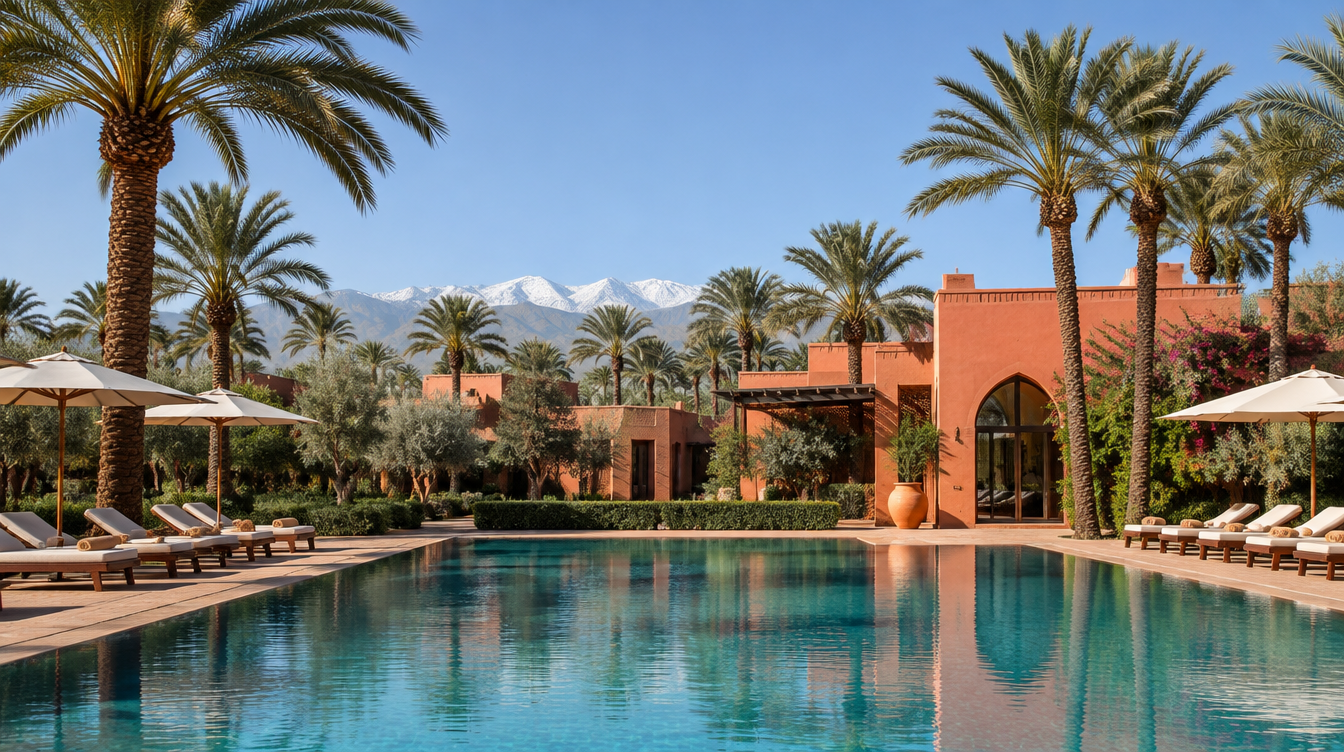
Hotels offer what a riad cannot always guarantee: drive-up car access to the front door, a parking lot, an elevator, a 24-hour front desk, large swimming pools, and sometimes a kids’ club, gym, or spa. In the Palmeraie or along the road to the Atlas Mountains, you enjoy green spaces and a genuine sunny vacation vibe.
On the downside, the atmosphere is more standardized, and you are rarely within walking distance of the medina. From Hivernage or Guéliz, expect a 10 to 20-minute walk or a short petit taxi ride; from the Palmeraie, you will need to plan for a taxi or the hotel shuttle for every outing, which adds to your budget and sightseeing time.
Riad or hotel in Marrakech: comparison at a glance
| Criterion | Riad (medina) | Hotel (Guéliz, Hivernage, Palmeraie) |
|---|---|---|
| Location | Within walking distance of souks and monuments | Taxi or walk to reach the medina |
| Car access | Rarely to the front door | Yes, with parking |
| Size | Approx. 3 to 10 rooms | Several dozen to hundreds of rooms |
| Swimming pool | Small plunge pool, not always available | Large swimming pool common |
| Atmosphere | Intimate, guesthouse style | More anonymous, full services |
| Accessibility | Stairs, rarely an elevator | Elevator, accessible rooms |
| Double room price* | Approx. €40 to €90 (simple), €100 to €200 (charms), €250+ (luxury) | Approx. €50 to €100 (mid-range), €150 to €300 (4-5 star), much more for luxury palaces |
A tourist tax applies on top of these prices, generally paid on-site: depending on the establishment’s category, rates range from about €1 to €3.50 per adult per night, and children under 12 are often exempt. Ask if it is included when booking.
Which accommodation matches your travel profile?
Couples or friends
A riad is often the best choice for a first 3 to 5-day trip: you can walk everywhere, head back to rest in the afternoon, and dine on the terrace. Traveling with friends, renting an entire riad (privatized) can actually work out cheaper per person than booking several hotel rooms.
Families
With children over 6 or 7 years old, a riad with a family suite works wonderfully. With toddlers, exercise caution: unbarriered courtyard pools, steep stairs, low terrace railings, and difficult stroller navigation in narrow alleyways. A hotel with a pool and garden, or a riad near a taxi-accessible medina gate, makes things much easier.
By car or road trip
If you are arriving with a rental car, a hotel with parking spares you the headache of finding a spot. If you are set on a riad, pick one close to a guarded parking lot (expect to pay a few dozen dirhams per day) and ask the team to meet you upon arrival.
For a relaxing or long stay
If your priority is swimming pools, sunshine, and downtime, a hotel in the Palmeraie or Hivernage is more suitable. In fact, many travelers combine both: two or three nights in a riad for the medina experience, followed by a few nights in a pool hotel to unwind.
Tips for booking successfully
- Check the map, not just the photos: a riad “in the medina” could be 5 or 25 minutes’ walk from Jemaa el-Fna. The neighborhoods of Mouassine, Riad Zitoun, Bab Doukkala, or the Kasbah do not all offer the same vibe.
- Ask where the taxi can drop you off and how far the riad’s door is on foot. Many riads offer an airport transfer with accompaniment right to the door, which is very convenient on your first night.
- Check heating and air conditioning: essential from December to February for the former, and June to September for the latter.
- Read recent reviews about noise, hot water, and breakfast—three things that make all the difference in a riad.
- Check what is included: breakfast, tourist tax, transfer, access to the hammam.
- Keep an offline map and a photo of the riad’s door: the alleys look alike and GPS signal can be unreliable inside the medina.
If you are leaning toward a riad, you can compare selected properties visited on-site by a local team on Riads Kech, riad specialists in Marrakech. And to plan your days, our things to do in Marrakech guide will help you place your accommodation in the right spot.
Frequently Asked Questions
Is a riad more expensive than a hotel in Marrakech?
Not necessarily. Both cover all price ranges. For the same budget, a riad generally offers more charm, while a hotel offers more space and services.
Are riads safe?
Yes, the medina is busy and riads are secured with a door monitored by the staff. In the evening, ask someone to walk you back the first few times if the alleys seem deserted or if you get lost.
Can you stay in a riad with a baby?
It is possible, but choose a riad without an open plunge pool or with a protected one, request a ground-floor room, and bring a baby carrier instead of a stroller.
How many nights should you spend in a riad?
Two to four nights are usually enough to enjoy the medina. Beyond that, many travelers appreciate a quieter stopover with a swimming pool.
Should you bring cash?
Yes. The tourist tax, tips, and some smaller riads are often paid in dirhams. Our article on practical tips for visiting Morocco covers money, ATM withdrawals, and tipping in detail.
In Summary
To discover Marrakech on foot and experience the medina from within, a riad remains the most natural choice. If you are traveling by car, with young children, or looking to relax by a large swimming pool, a hotel will be more comfortable. And nothing stops you from combining both during the same trip.